Dev Gyas & Dev Shayani

The Midnight Leap on Dev Shila

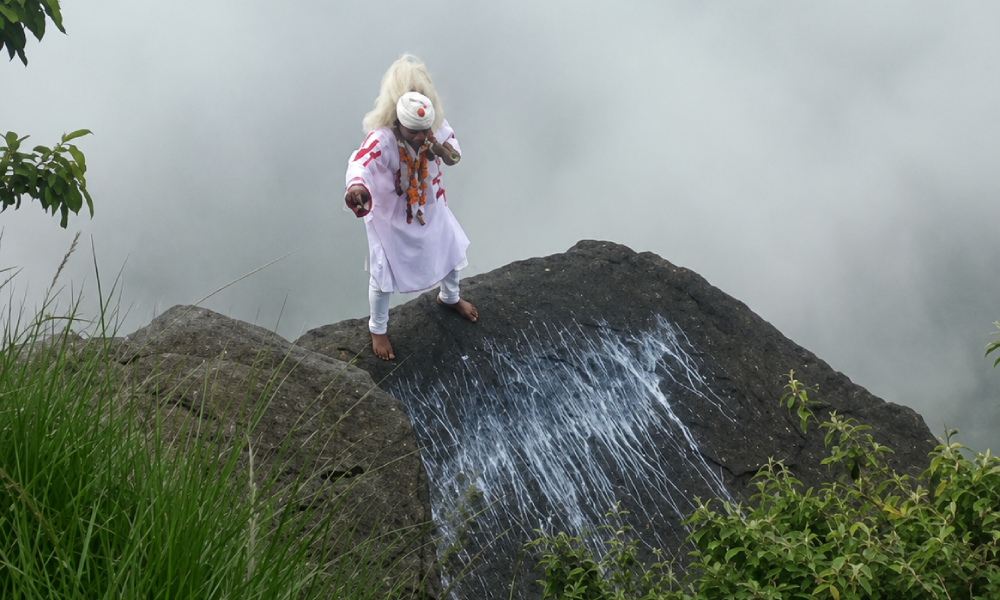
The most awe-inspiring and perilous ritual of Bhureshwar Mahadev takes place during the sacred nights of 'Dev Gyas' and 'Dev Shayani'. In the pitch-black darkness of midnight, the senior priest, fully possessed by the deity's divine energy, makes a miraculous leap onto the "Dev Shila" (Tandav Shila) — a rock precariously suspended over a 6,800-foot-deep gorge just behind the main Shivalinga. Standing barefoot on this dangerous precipice, the deity blesses the devotees and the land. This intense ritual is a repetition of an ancient historical event witnessed by Raja Brahm Prakash of Sirmour, where the possessed priest poured a stream of milk on this very rock.
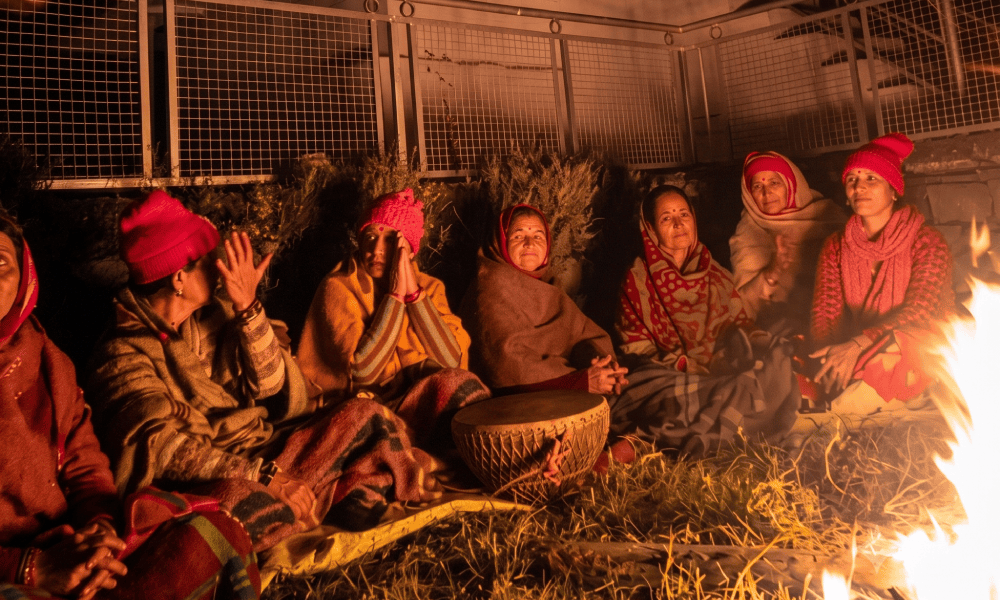
The Midnight Leap on Dev Shila
Night of Dev Gyas

The Sacrifice of 'Suhag' Symbols

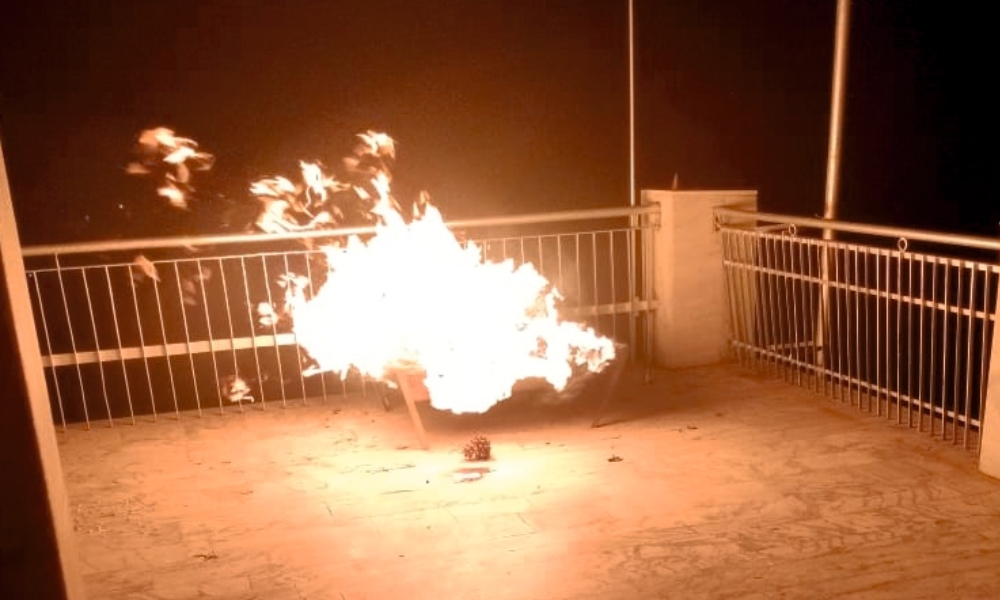
Running parallel to the perilous midnight leap is a deeply emotional and supreme act of faith performed by the priest's wife at the 'Pujasthali' in Pujarli village. Because the midnight jump on the Dev Shila is life-threatening, the wife of the hereditary priest traditionally removes her symbols of marriage (suhag), such as her bangles and jewelry, on the night of Dev Gyas. She sits in deep prayer and anticipation, living as a widow in absolute surrender to the deity's will. Only when the traditional musical instruments echo through the mountains, signaling that the priest has safely completed the leap and returned, does she joyfully adorn her marriage symbols once again.

The Sacrifice of 'Suhag' Symbols
Dev Gyas Ritual

Preparation of the Sacred Ash 'Chhu'

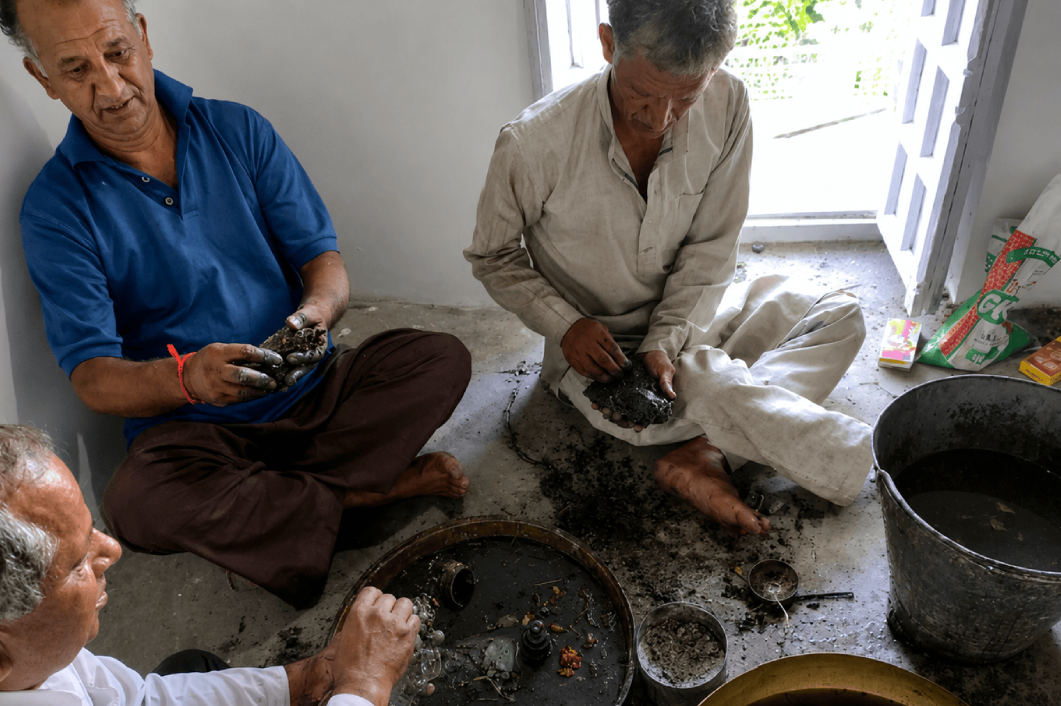
An integral part of the temple's esoteric traditions is the preparation of the holy ash, locally known as 'Chhu'. This highly revered sacred ash is meticulously prepared on the auspicious night of Dev Gyas at the Pujasthali in Pujarli village. The creation of 'Chhu' is bound by strict spiritual protocols and deep devotion. Once prepared, this ash acts as a potent medium of the deity's blessings and protection, distributed among the devotees who hold it in the highest regard for its spiritual and healing properties.

Preparation of the Sacred Ash 'Chhu'
Festive Tradition

Dev Yatra & Divine Possession

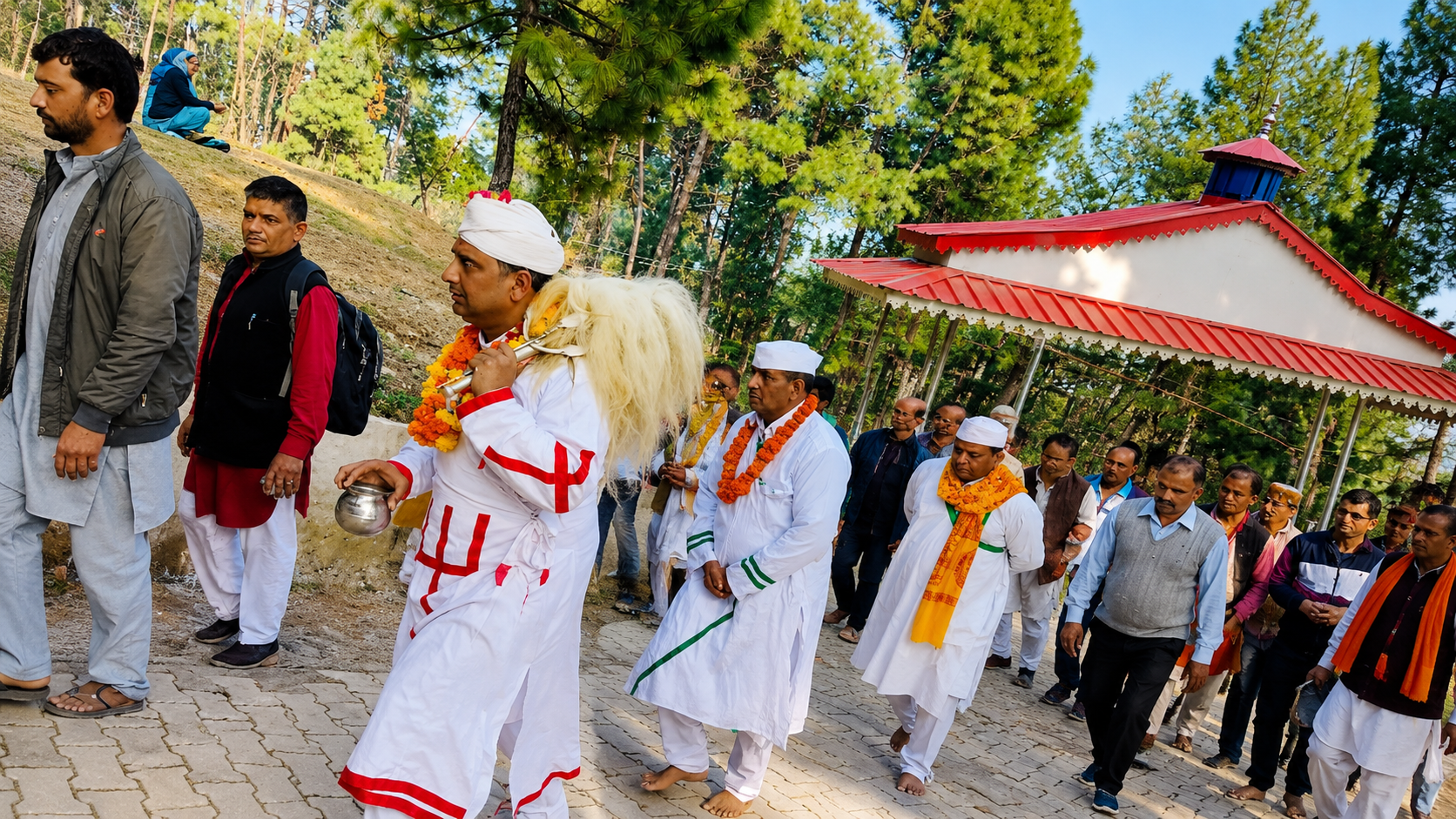
The 'Dev Yatra' is a grand and spiritually charged procession that brings the deity directly to the people. Originating from the Pujasthali in Pujarli village, this divine journey is marked by the mesmerizing phenomenon of divine possession. The senior priest, adorned with the ancient silver ornaments—the Trishul, Chhatra, and Chanvar—becomes the physical vessel for Lord Bhureshwar Mahadev's energy. Escorted by the rhythmic beats of traditional drums (Dhol, Nagada) and horns, the deity travels to bless the region. During local festivals, the sacred 'Silver Tumbadi' is also carried from house to house, ensuring that the divine grace reaches every family, even those who cannot climb the high mountain peak.

Dev Yatra & Divine Possession
Nocturnal Rituals

Midnight Musical Signaling

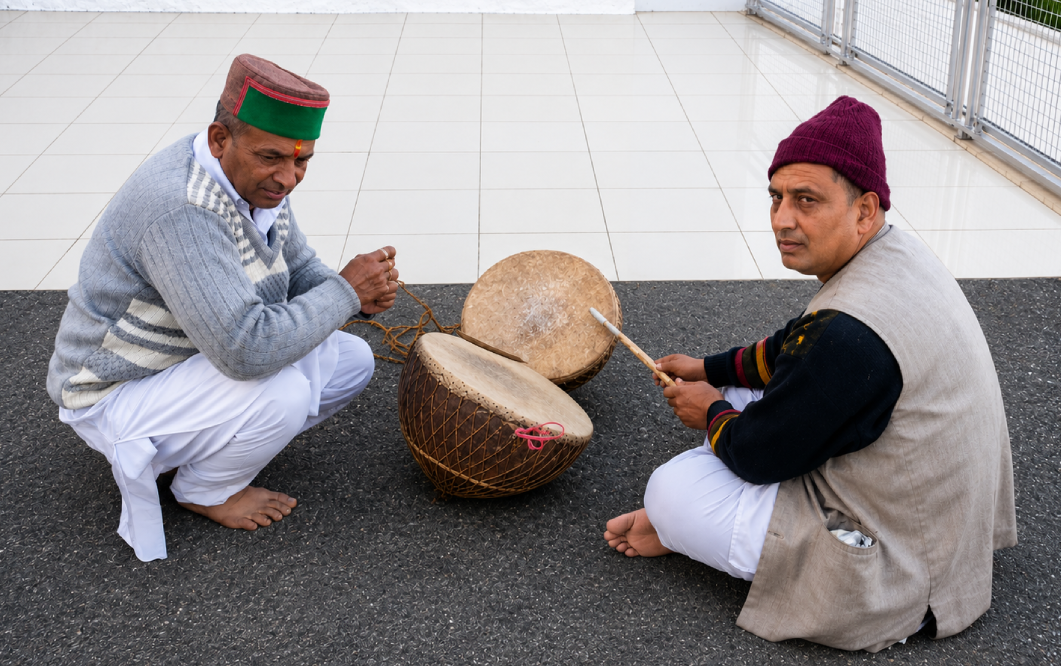
The traditional musical instruments—such as the copper Dhol, Nagada, Arnsingha, Karnal, and Shehnai—are not merely for festive celebration; they serve a critical function during the temple's most dangerous rituals. When the priest performs the terrifying midnight leap on the Dev Shila, the community and his family wait in anxious silence. Upon the safe and successful completion of this perilous jump, these traditional instruments are played from a specific, elevated location. The echoing sounds through the Himalayan night act as a sacred signal, informing the anxious devotees and the priest's wife that the holy rituals are proceeding auspiciously and the priest is safe.

Midnight Musical Signaling
Daily Shrine Kar

Devling Vidhan & Daily Worship

Accessing and worshipping the primeval Swayambhu Bhu Linga, located deep within the Kwagdhar mountain, is strictly governed by an ancient set of protocols known as 'Devling Vidhan'. This means the main deity cannot be approached casually; rituals must be performed exactly as dictated by centuries-old divine laws. Alongside these specialized protocols runs the daily 'Kar' (duty)—the continuous, unbroken performance of 'puja-path' (prayers) and 'dhup-deep' (lighting of incense and lamps). This daily devotion has been sustained by the hereditary priests for generations, historically supported by the perpetual Muafi (grant) from the Sirmour State, ensuring the temple's spiritual rhythm never ceases.

Devling Vidhan & Daily Worship
Ashvin Shukla Ashtami

Dev Snan After Diwali

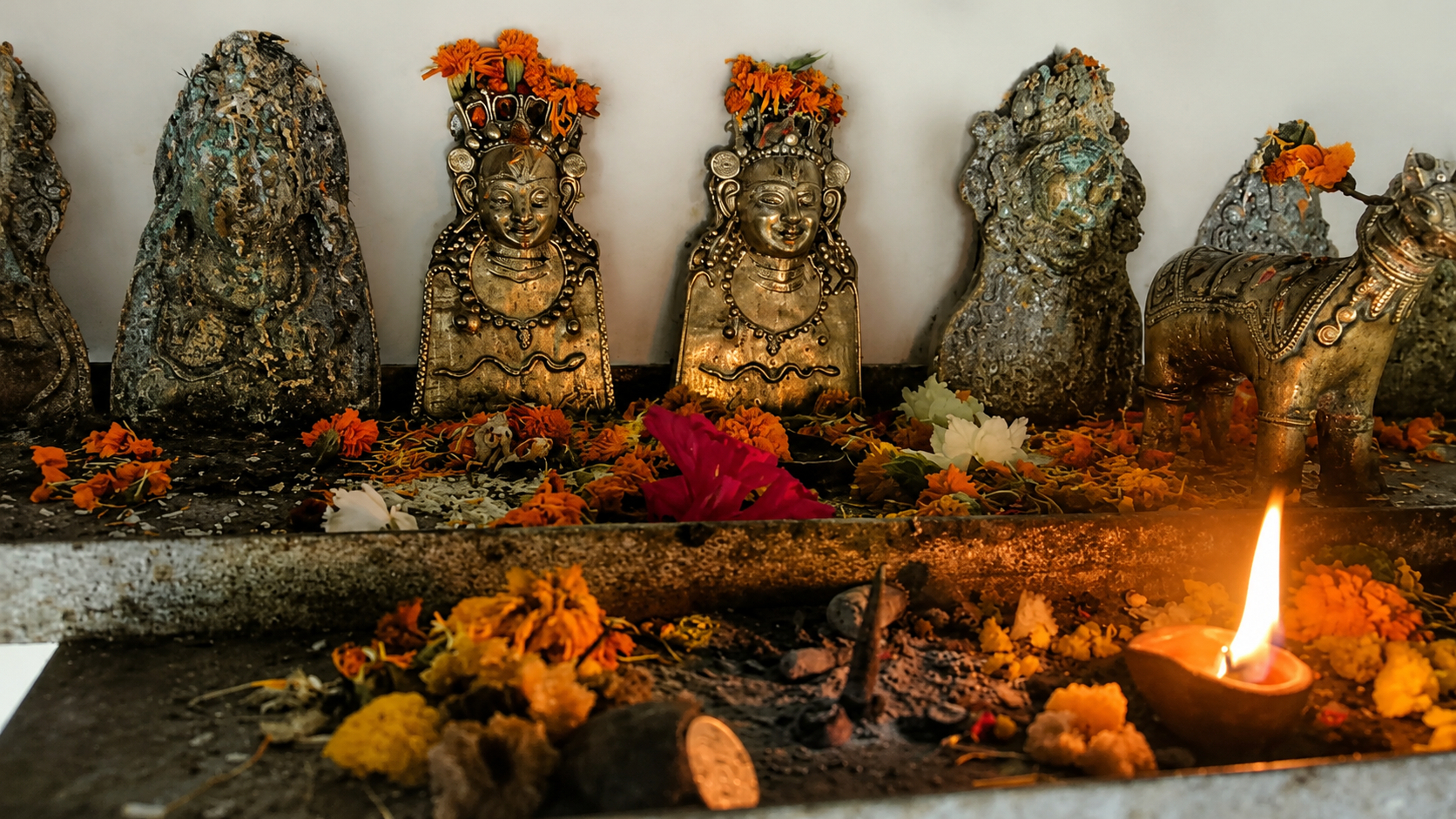
A deeply revered tradition following the grand festival of Diwali is the 'Dev Snan'—the sacred ceremonial bathing of the deity's artifacts. In this profound purification ritual, the ancient metal idols, the majestic silver ornaments (Trishul, Chhatra, and Chanvar), and other holy relics of Bhureshwar Mahadev undergo a traditional cleansing. The hereditary priests meticulously bathe these sacred items using holy water and traditional purifying elements. This divine bath symbolizes spiritual renewal, the washing away of any worldly impurities, and the re-energizing of the divine presence within the artifacts for the upcoming annual cycle of worship, ensuring that the deity's unblemished grace continues to flow to the devotees.

Dev Snan After Diwali
The Seven Sacred Offerings

Saptadugdh Dhara: The Seven Sacred Streams

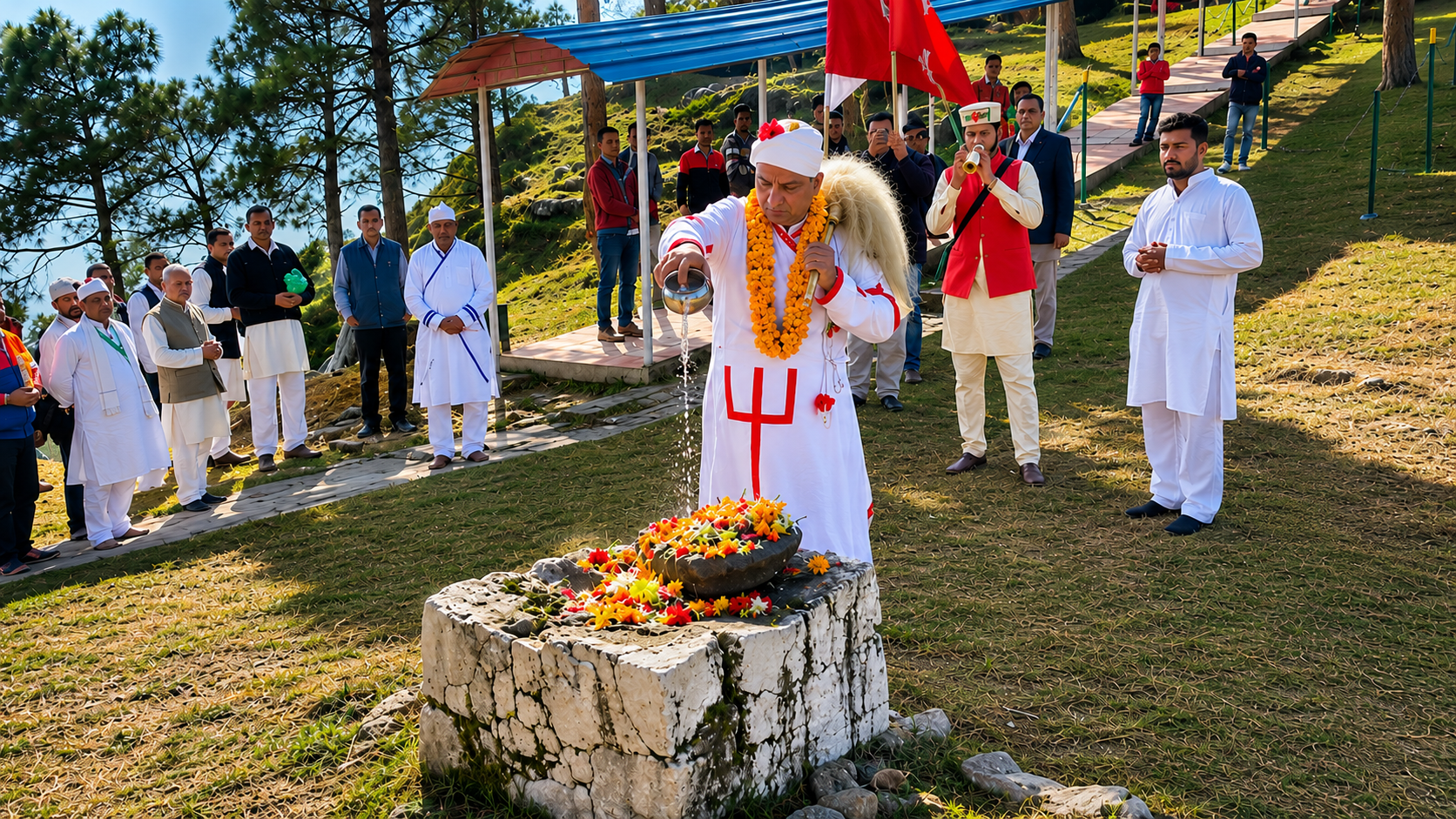
During the majestic Dev Yatra from Pujarli village to the main temple, a deeply mystical ritual unfolds known as the Saptadugdh Dhara. The senior priest, fully possessed by the deity's divine energy, faces the east and offers a continuous stream of milk at seven specific, highly revered locations along the sacred path. Accompanied by the resounding echoes of conches and traditional drums (Dhol-Nagada), these seven spots hold immense spiritual significance; it is believed that from these very vantage points, one can spiritually witness supreme Jyotirlingas like Amarnath and Kedarnath. The offering of milk at these sites is a breathtaking display of divine grace and ancient tradition.

The Seven Sacred Streams:

  • Devo ra Dhayda ki Dhara
  • Ser ki Dhara
  • Kwag (Pachi) ki Dhara
  • Gandevo ra Ghat ki Dhara
  • Gonra Ghat ki Dhara
  • Pachi ki Dhara
  • Kalodtu (Nandi) ki Dhara
Saptadugdh Dhara: The Seven Sacred Streams

Location

Bhureshwar Mahadev Temple, Kwagdhar, Sirmaur, H.P.

Temple Timings

Temple Open at Sunrise till Sunset

Photography

Photography allowed in designated areas only.

Visitor Guidelines

Please maintain silence and respect the sanctity of the place.